
Everyone has a theory about what makes restaurant biryani taste different from home biryani. Some blame the rice, some blame the dum (slow steam-cooking), and some blame the pot. In our experience, it usually comes down to three things — and none of them require a professional kitchen.
1. Toast your masala before it goes in
A good Biryani Masala already has whole spices in the right proportion — the difference comes from blooming it in hot ghee or oil for a few seconds before adding the meat or vegetables. This wakes up the essential oils in the spices instead of letting them cook raw and muted.
2. Layer, don’t mix
Restaurant biryani is usually layered — partially cooked rice, then the meat/curry, then more rice, finished with fried onions, mint, and a little saffron milk — rather than everything stirred together. The layers steam into each other during dum, giving pockets of intense flavour instead of one uniform taste.
3. Get the dum right
Dum is the slow, sealed steaming at the end — traditionally with a dough seal on the lid, though a tight-fitting lid and a heavy tawa underneath the pot works at home too. Low heat, 20–25 minutes, no peeking.
The one shortcut worth taking
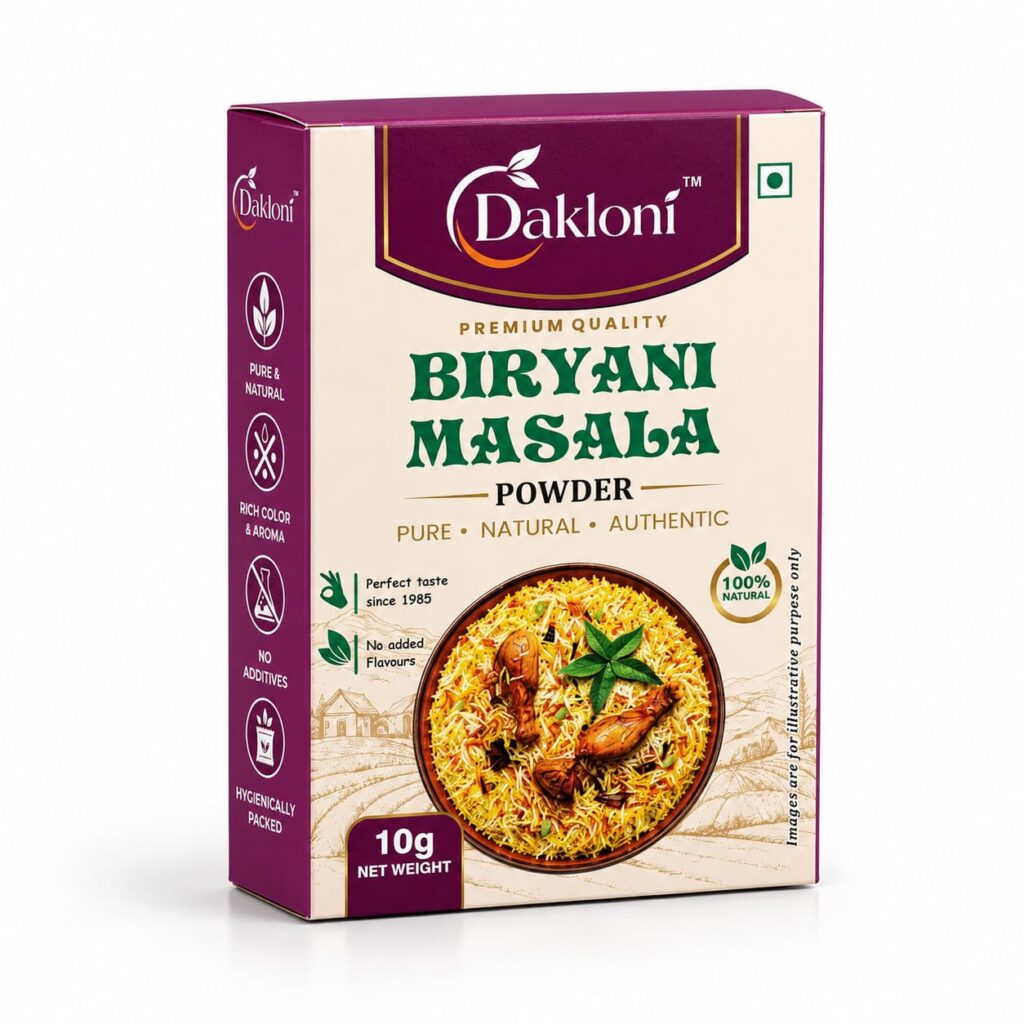
You don’t need to hand-grind twelve spices to get this right. A well-made Biryani Masala — like Dakloni’s, blended for authentic dum biryani — already has the ratios worked out. Your job is just steps 1 to 3.
Try it with Dakloni Biryani Masala and see how close you get to your favourite restaurant’s version.